Home / Blog / Best books on naming a business
7 Best Books on Naming a Business, Ranked by a Domain Investor
Affiliate disclosure: Some links on this page are Amazon affiliate links. If you buy through them, I may earn a small commission at no extra cost to you. How this works.
I read seven books on naming a business and ranked them by one question: how useful is each one when you actually have to pick a name? Here is what each book is good for, in my own words.
Short answer: If you read only one, make it Hello, My Name Is Awesome. If you want the full process from first idea to final choice, read Brand Naming too. The other five are useful, but they help more with the big picture than with the name itself.
I like books, and I liked all seven of these. So this is not a list of good books against bad ones. It is a ranking by usefulness for one job: choosing a name.
I work with domain names and brand names, so that is the lens I used. Your view may be different, and that is fine.
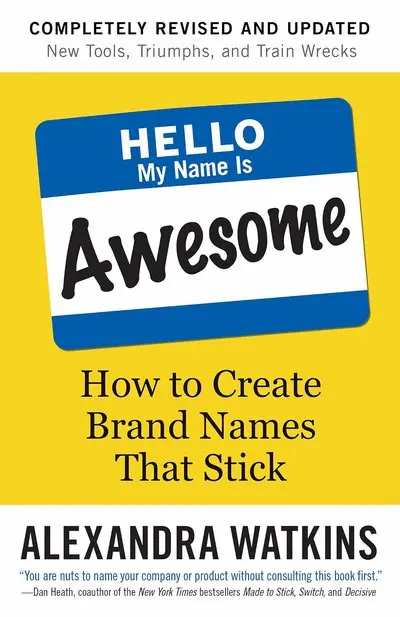
1. Hello, My Name Is Awesome
by Alexandra Watkins
If you only read one book on this list, make it this one. You don’t need any branding background to follow it. Watkins explains things in plain language and shows how an ordinary name can become easier to remember.
She gives you two tools, SMILE and SCRATCH. SMILE checks five good qualities. A good name is Suggestive (it hints at what the business does), Memorable, full of Imagery, has Legs (you can use it in many ways), and Emotional. SCRATCH is the opposite list: hard spelling, awkward pronunciation, a name too close to another brand, or one people simply forget.
What I like most is that she doesn’t make naming complicated. You can take a name you already love and test it in a few minutes.
For domains, this matters. We often fall for names that are short or sound “premium.” But can people spell it after hearing it once? Will they remember it tomorrow? The book keeps pulling you back to questions like these.
If you want to see how I look at a name in practice, I wrote up my thinking on two of my own: the Juronix case study and the RestInJoy case study.
It is not a trademark guide, though. After you pick a name, you still need to check trademark and domain availability on your own.
Good for: people naming a new business, domain investors and flippers, and anyone who wants to offer naming as a freelance or consulting service.
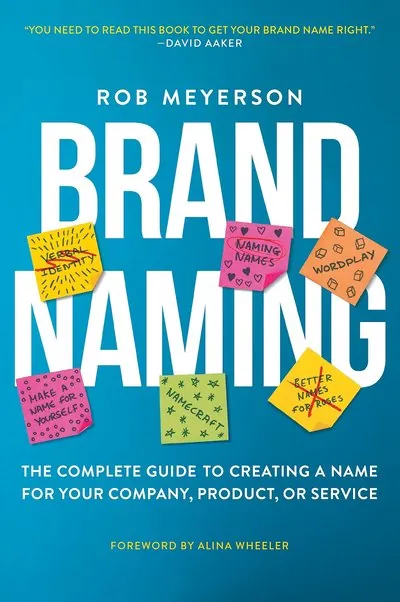
2. Brand Naming
by Rob Meyerson
This is the most complete book here. Meyerson, a professional naming consultant, takes you from the first search for a name all the way to the final choice. He shows how to plan a naming project and how to turn creative ideas into a real decision.
The part I value most is the selection process. Many of us find a few good names and think we are done. In real naming work, you create hundreds of possible names, test them, throw out the weak ones, and only then choose. He also gives proper space to trademark research and legal clearance, which is where many new founders cut corners.
A free domain doesn’t mean the name is safe to use. Maybe an established brand already has the same or a very similar name. Skipping that check can get expensive later.
It is a detailed book. If you only want a few catchy ideas, it may feel long. But if you want to treat naming as real work, the detail is the point. I would keep this one on my desk and keep going back to it.
Good for: domain investors, naming consultants, agencies, and founders who plan to keep their name for years.
3. Don’t Call It That
by Eli Altman
Some names are meaningful and easy to say, yet they have no spark. Others tell you almost nothing the first time you hear them, but they stick. That idea is the heart of this book for me. A name doesn’t have to explain everything. Sometimes the curiosity it creates is its biggest strength.
There are no strict steps here. The book pushes you to think more creatively, and it helps most when you have a long list of names and none of them feel good enough.
My advice: don’t read it first. Read it once you are some way into the process and have a few candidates. Then it helps you try something a bit braver.
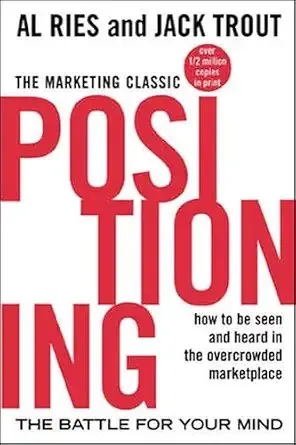
4. Positioning
by Al Ries and Jack Trout
This is not really a naming book. Its main point is that a good product is not enough. You need a clear place in people’s minds.
Think of brands you know. One is remembered as the cheap choice, another as the safe one, another as luxury. I liked that the book looks at branding from the customer’s side. What a company wants to say about itself matters less than what people take from it.
For names, the lesson is that a good name helps people recognize you, but it works best when it is tied to a clear position. The book is old and much of today’s digital business isn’t in it, but the core idea still holds.
If you want something more directly useful for picking a name, the first three books on this list felt more potential and inspiring to me. Read this one for the thinking behind a brand.
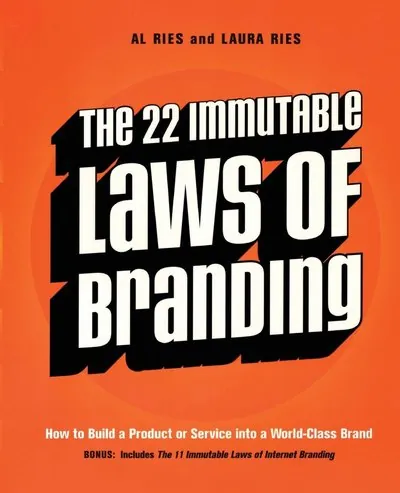
5. The 22 Immutable Laws of Branding
by Al Ries and Laura Ries
The book lists 22 principles of branding. The idea I liked most is one the authors keep returning to: a brand needs its own clear identity. Many companies try to be everything at once, and that rarely works.
It also touches on new categories, standing apart from competitors, choosing a name, and keeping trust over time. When we pick a domain, we think about length, spelling, and the extension. This book adds a bigger question: what identity will this name build in the market?
I would not treat the 22 “laws” as rules for every business. The book is old, and digital marketing and social media have changed a lot. I wrote about one part of that change in my CircleID article, How AI Answer Engines Are Quietly Rewriting What Makes a Domain “Brandable”. My takeaway is simple: a good brand is not everything to everyone. It is a clear and different idea in the minds of a specific group of people.
If you want help with naming itself, I’d start with the books above.
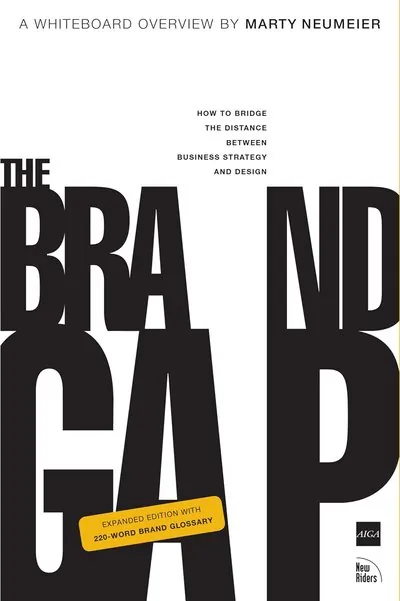
6. The Brand Gap
by Marty Neumeier
A short book with lots of pictures and small chapters. Neumeier explains that a brand is more than a name, a logo, or a nice design. It is the picture, feeling, and belief people carry in their minds about you.
I liked how it changes the way you look at branding. We assume people will see us as we present ourselves. In reality, what they think and feel matters more.
To be clear, this is not a naming guide. It gives you a base for understanding the business before you start looking for a name. After you choose one, it helps you check whether the name fits the identity you want.
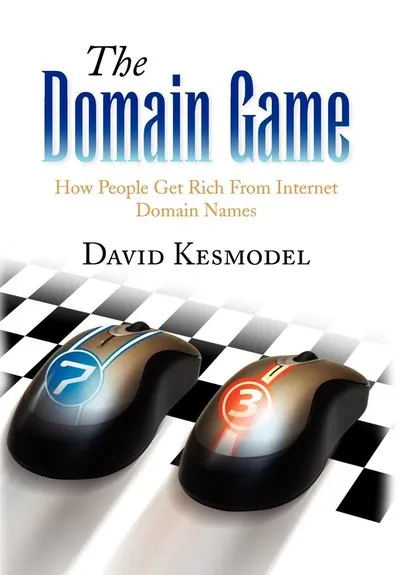
7. The Domain Game
by David Kesmodel
The strongest part of this book is its true stories. Kesmodel tells the story of Scott Day, an Oklahoma watermelon farmer who ended up owning valuable domains like recipes.com and chairs.com through his company, Digimedia. There is also a story of a man who collected domains other people dropped after the dot-com crash and later became a multimillionaire.
The stories make it clear that domain investing is more than registering names and waiting. It takes market sense, good timing, and some idea of what buyers want. The book also covers how search engines like Google and Yahoo made domains more important, and the trademark disputes and ownership fights that came with the business.
I liked how real it feels. It doesn’t only show success. It shows the risks and the messy parts, and makes it clear that you can start with little money but there is no promise of profit.
It is not about creating names, so it comes last. But if you want to understand how business value gets built around a domain, it is a very good read.
Good for: people in domain investing, flipping, or brokerage, and those who want to get in.
Where to start
You don’t need all seven. Here is how I would pick:
- Naming something now? Start with Watkins, then Meyerson.
- Stuck between a few names? Try Altman.
- Want the big picture of brands? Ries and Trout, and Neumeier.
- Curious about domains? Kesmodel.
What no book will tell you
No book can check whether your domain is available or whether the name has a trademark problem. Do that before you get attached to a name. If the .com you want is already taken, my guide on how to buy a taken domain without a broker shows the steps. I explain the trademark check in plain English in How to Check If a Domain Is Trademarked Before You Buy. For a quick first look at a name, try my free Domain Appraisal Tool.
Have you read any of these? Tell me whether your view matches mine. Send me a message.
Picked a name? Let’s check the domain.
Before you commit, I can check what the domain is worth and whether it is safe to buy. See the reports, or send me a message.
Keep reading
How to Check If a Domain Is Trademarked Before You Buy
A free 15-minute check in plain English, and how to read what you find.
Read the full post On the Site · Full ReadWhy This Domain Sits at $3,000–$4,500, Not $10,000
Most sellers price a domain by feeling. Here’s the comps-based math behind pricing Juronix.com.
Read the full postChecking a domain before you buy it?
Score it free in a minute, or order a written report for $39.
Get new domain insights by email
One short email when a new article or case study goes up. No spam, and you can unsubscribe at any time.