Home / Blog / Best trademark books for founders
Best Trademark Books for Founders Who Can’t Afford a Lawyer Yet
Affiliate disclosure: Some links on this page are Amazon and Namecheap affiliate links. If you buy through them, I may earn a small commission at no extra cost to you. How this works. This page is general education, not legal advice. See my Disclaimer.
Filing a US trademark costs at least $350 per class in government fees, and that is before a lawyer charges anything. If your name later collides with someone else’s, the bigger cost is a rebrand: a new domain, a new logo, and customers who have to learn your name again.
Short answer: If you buy only one, make it Trademark: Legal Care for Your Brand by Glen Secor (Nolo, 14th edition, 2025). Read the free trademark pages on USPTO.gov alongside it. Add a short primer such as All About Trademarks or the ABA’s What Is a Trademark? only if you want a second explanation.
A book will not replace a lawyer. It can teach you how to pick a name that is easier to protect, how to search for conflicts, and when a problem is serious enough to pay for help.
This list covers five paid books and two free resources, ordered by how useful they are to a founder with no legal background and a small budget. If you are still choosing a name, start with my ranking of the best books on naming a business.
How I picked these books
I judged each book on four points. The book details come from publisher and retailer listings, and the takeaways are my own.
- Age. Trademark procedures and fees change. A 2025 book is safer than a 2009 one.
- Author. A practicing or former trademark attorney, or a legal publisher with a track record.
- Level. Trademark law books for non-lawyers should not assume you already know legal terms.
- Usefulness. Does it help you do something (choose, search, file) or only describe the law?
Editions and prices change, so check the current listing before you buy. The prices below are typical US retail listings from November 2026.
| Book | Best for | Published | Typical new price |
|---|---|---|---|
| Trademark: Legal Care for Your Brand (Glen Secor) | Most founders | 14th ed., April 2025 | $28–$40 |
| All About Trademarks (Andrea Hence Evans) | A quick, plain-English read | 2019 | about $20 |
| What Is a Trademark? (ABA, 5th ed.) | Learning the vocabulary | April 2024 | about $18–$20 |
| Patent, Copyright & Trademark (Richard Stim) | Choosing between IP types | 19th edition | $45–$50 |
| Understanding Trademark Law: A Beginner’s Guide (Linda Tancs) | Library or used copy | 2009 | about $29 used |
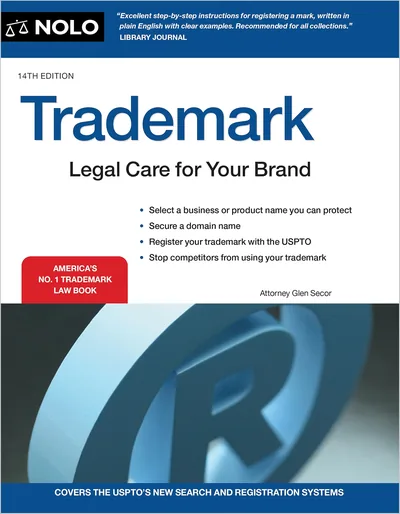
1. Trademark: Legal Care for Your Brand
by Glen Secor (Nolo)
This is the one I’d buy first. The 14th edition came out in April 2025 and runs 320 pages. Secor is a legal editor at Nolo and a former business and IP attorney.
What it covers: choosing a name, logo or slogan you can protect, securing a domain name, registering with the USPTO, and stopping others from using your mark. The cover says this edition covers the USPTO’s new search and registration systems.
Why read it: it follows the order a founder works in: pick a name, search, file, protect. It is also a recent edition, so the filing steps are less likely to be out of date.
My takeaway: check whether a name is legally available before you fall in love with it. A name can be great for marketing and still collide with someone else’s trademark rights. Then you are paying for a rebrand, legal fees and lost business. As a domain investor, I now judge a name on more than length, sound and brandability. I look for possible trademark conflicts too.
Good for: founders who plan to file their own US application, and anyone who wants to know what a lawyer will ask before paying for one. Limit: it helps you file, not fight. If someone challenges your name, you need a lawyer.
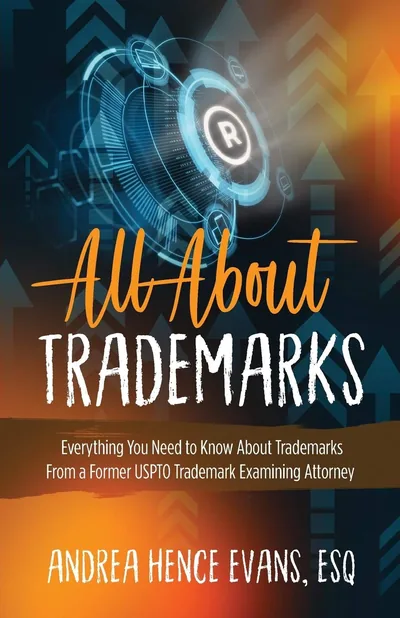
2. All About Trademarks
by Andrea Hence Evans
A short paperback of about 100 pages, published in 2019. Evans is a former USPTO trademark examining attorney.
What it covers: how registration works, why registering is worth it, and the common mistakes people make.
Why read it: it is short enough to finish in a couple of sittings, which makes it a cheap second read after the Nolo book.
My takeaway: registration is more than collecting a certificate. In the US you can build rights just by using a name in business, and registering adds legal protection on top of that. Say you want to build a brand called MUBEZ, a name from my own portfolio (Mubez.com case study). Buying Mubez.com is not the first step. First check:
- whether anyone already holds a trademark for MUBEZ;
- whether the same or a similar name is used in the same business category;
- whether another company has rights over similar goods or services;
- how suitable the name is for registration later.
For a domain investor the lesson is simple: a domain being available and a trademark being available are two separate things. Mix them up and you can land in serious trouble. The other side matters too: I wrote on CircleID about three 2026 UDRP cases where the domain was older than the complainant’s trademark.
Good for: founders who want a plain-English first look before they commit to a longer book. Limit: it came out before the January 2025 fee changes and the 2023 search system. Use it for the ideas, and take current steps from USPTO.gov.
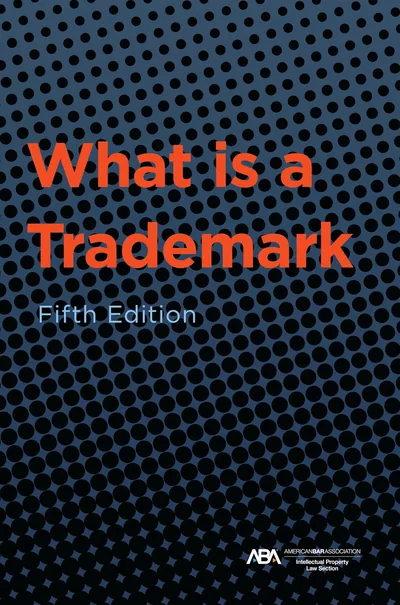
3. What Is a Trademark? Fifth Edition
by the ABA Section of Intellectual Property Law
A concise book from the American Bar Association, published in April 2024.
What it covers: what a trademark is, what makes a name distinctive, registration, proper use, trademarks as property, and infringement.
Why read it: it is written for clients and anyone who wants the basics, and it teaches the words lawyers use. That makes your first call with a trademark lawyer easier to follow.
My takeaway: a trademark identifies the source of a product or service and sets one business apart from another. Think of Apple for technology, Nike for clothing and sports gear, Coca-Cola for drinks. The biggest lesson for me is that a good brand name has to do more than sound nice. It needs to be distinctive, work as a commercial identity, and be legally protectable.
Good for: founders who expect to hire a lawyer later and want to follow the conversation. Limit: it explains the law but doesn’t walk you through a filing.
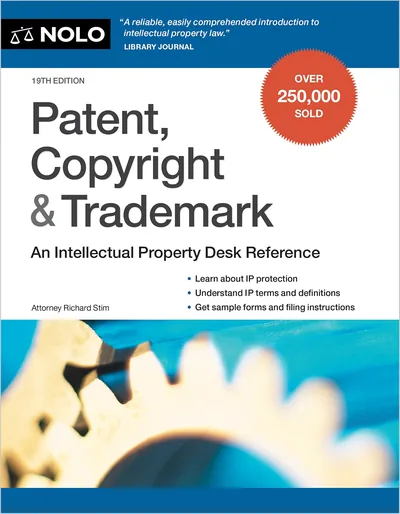
4. Patent, Copyright & Trademark
by Richard Stim (Nolo)
A desk reference that covers patents, copyrights and trademarks in one book. The cover shows the 19th edition.
What it covers: the trademark section has an overview, key definitions, forms and a guide to preparing a federal application. It also explains where trademark overlaps with copyright or patent, such as on product packaging.
Why read it: many founders aren’t sure which kind of protection fits what they made. This book helps you sort that out before you spend money on the wrong one.
My takeaway: many founders mix up the different kinds of intellectual property, but they are not the same thing:
- Patent: new inventions.
- Copyright: creative work such as writing, images, music and software.
- Trademark: brand names, logos, slogans and other marks of identity.
- Trade secret: confidential business information and valuable secret processes.
Say you start a new tech company and call it SolvaFunds, another name from my portfolio (SolvaFunds.com case study). The company name is a trademark question. The logo is a copyright matter and, depending on the case, a trademark one too. A new technical invention may be a patent matter, and your private business methods may be trade secrets.
For a domain investor the key point is this: a domain name on its own is not normally protected by copyright, and buying a domain does not make you the owner of a trademark in that name. Domain registration and trademark registration are separate things. That matters when you buy, build on or resell a domain.
Good for: founders with a product, software or creative work as well as a name. Limit: it is broad, so the trademark part is less detailed than Secor’s book. Check the current edition when you buy, and follow the current USPTO forms rather than the book’s filing walkthrough.
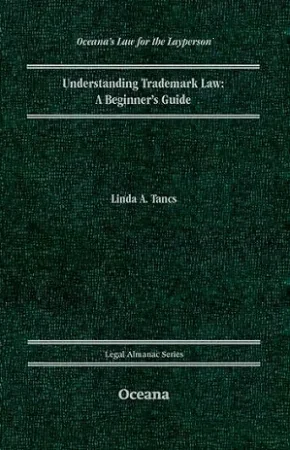
5. Understanding Trademark Law: A Beginner’s Guide
by Linda A. Tancs
A 320-page guide from Oxford University Press, published in 2009. Best found at a library or from a used-book seller.
What it covers: registering, maintaining and enforcing a mark, with step-by-step guidance on USPTO registration. It also covers likelihood of confusion, dilution, counterfeiting and trademarks in e-commerce, and ends with a glossary.
Why read it: the structure is clear and the glossary is handy. But it is 17 years old, so treat it as background reading.
My takeaway: using a name in business and registering it are not the same thing. In the US, real commercial use can create common-law rights in some situations, while registration adds formal legal benefits. Registering is not the end of the job either. To keep your rights you need to keep using the mark and file the required documents on time, and you need to know what you can do if someone else uses your mark. A naming strategist’s job is not just to find a nice name. It is to weigh the legal risk and the long-term value of that name.
Good for: readers who like a textbook-style guide and can borrow it from a library. Limit: don’t use it for current filing steps or fees.
Two free resources to use alongside the books
USPTO Trademark Basics and trademark search. The USPTO offers beginner guides, videos and its search tool at tmsearch.uspto.gov. That system replaced the old TESS database on November 30, 2023. A USPTO booklet called Protecting Your Trademark still circulates online, but the edition on the USPTO site was printed in 2014. It refers to TESS and a $325 filing fee, so do not use it for current steps.
Trademark Law: An Open-Source Casebook. This free textbook by NYU professor Barton Beebe is listed on the Open Textbook Library under a Creative Commons Attribution-NonCommercial-ShareAlike license. It was designed for a four-credit law school course, so use it to go deep on one topic, not as your starting point.
Books to skip for now
- Practitioner treatises such as Kane on Trademark Law and McCarthy on Trademarks and Unfair Competition. They are written for practicing lawyers and law students. Thomson Reuters trademark titles listed in November 2026 ran from $177 to $1,044.
- Logo design collections such as American Trademark Designs. They are about design history, not law. Keep them for inspiration.
- Trademark Valuation by Smith and Richey. It is about putting a value on a mark, not choosing or registering one.
A five-step DIY name check to run while you read
- Choose a name that is easier to protect. The books explain that invented or arbitrary names are generally stronger than names that simply describe the product. My post on why “meaningless” brand names built billion-dollar companies covers the same idea.
- Search the USPTO database. Look for identical names and for similar ones, including similar sounds and spellings, in your field and nearby fields. The test is likelihood of confusion, not only an exact match. How Much Does a Trademark Search Really Cost? explains what free and paid searches cover, and a clean result is still not a guarantee: see Zero Trademark Hits, Still at Risk?
- Search beyond the USPTO. Check Google, app stores, social platforms and business registries. A business can have rights in a name through use, even without a registration. My guide to checking if a business name is available lists the free checks in order.
- Check the domain and the handles. A free name on paper is not much use if the .com is gone. Here is how to check if a domain is trademarked before you buy.
- Decide whether to file now. The base USPTO application fee is $350 per class. The USPTO adds $100 per class for insufficient information and $200 per class if you use free-form text instead of its Trademark ID Manual. Check the USPTO fee page before you file.
This is the same logic I use with domains. Before I list a name for sale I run trademark checks, and for one LegalTech name we rejected more than 40 candidates before approving one. The Juronix.com case study shows how that process works. I learned why it matters the hard way, which I wrote about in 7 Domain Investing Mistakes I Made.
When a book is not enough
- You live outside the US. Since August 3, 2019, the USPTO has required foreign-domiciled applicants to use a U.S.-licensed attorney for trademark filings. Books still help you choose and clear a name, and they make you a better-informed client.
- You get a refusal, an opposition or a demand letter. This is where DIY stops.
- Money is the limit. The USPTO lists its Law School Clinic Certification Program for pro bono help, where law students work under a faculty supervisor. Each school sets its own criteria for accepting clients.
Frequently asked questions
What are the best trademark books for beginners?
Start with Trademark: Legal Care for Your Brand by Glen Secor (Nolo, 14th edition, 2025). It follows the practical order of choosing, searching, filing and protecting a name. For a shorter read, add All About Trademarks or the ABA’s What Is a Trademark?
Can I register a trademark without a lawyer?
In the US, yes. A DIY filing is allowed if you live in the US. If you are domiciled outside the US, the USPTO requires a U.S.-licensed attorney for your filings.
How much does it cost to file a trademark?
The USPTO’s base application fee is $350 per class, effective January 18, 2025. Surcharges of $100 or $200 per class can apply if the application lacks information or uses free-form text. Fees change, so confirm on the USPTO fee page.
Are books enough, or do I still need a lawyer?
Books are enough to choose a name, run a first search and understand an application. A lawyer is worth paying for when the USPTO refuses your mark, someone opposes it, or you receive a legal demand.
Is a trademark the same as a copyright?
No. A trademark identifies the source of goods or services, such as a name, logo or slogan. Copyright protects original creative works such as writing, art and music.
Where to start
Start free: read the USPTO’s trademark basics and run a search on your name. Then buy Secor’s book and use it to choose, check and file. Add a short primer only if you want one. When a dispute or refusal appears, or you file from outside the US, that is the point to pay a lawyer.
For more on why careful naming saves money, read why the names you reject matter more than the one you choose.
Sources
- USPTO: Trademark fee information
- USPTO: Foreign applicants and the U.S.-licensed attorney rule
- USPTO: Retiring TESS
- USPTO: Trademark Basics
- USPTO: Basic Facts about Trademarks booklet (2014)
- USPTO: Intellectual property legal assistance programs
- Open Textbook Library: Trademark Law, An Open-Source Casebook
Picked a name? Let’s check the domain.
Before you commit, I can check what the domain is worth and whether it is safe to buy. See the reports, or send me a message.
Keep reading
How Much Does a Trademark Search Really Cost? (Price Check)
From free to $1,000+: what each tier of trademark search covers, what it misses, and which one a domain buyer actually needs.
Read the full post Worth It? · Full Read7 Best Books on Naming a Business, Ranked by a Domain Investor
Seven naming and branding books, ranked by how much each one helps when you actually have to pick a name.
Read the full postChecking a domain before you buy it?
Score it free in a minute, or order a written report for $39.
Get new domain insights by email
One short email when a new article or case study goes up. No spam, and you can unsubscribe at any time.